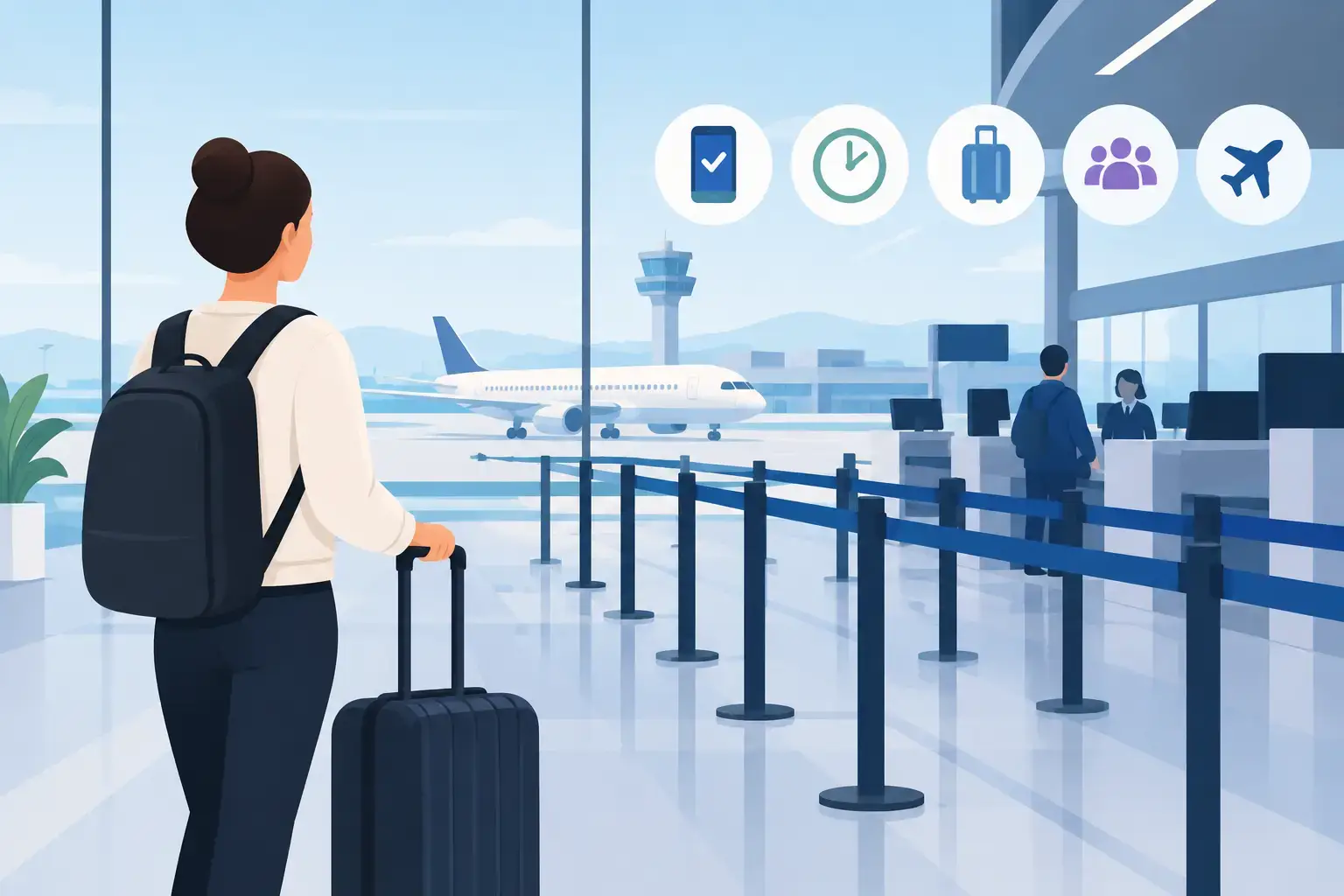
A 6:00 a.m. flight from Keflavík can turn into a 3:30 a.m. alarm, a crowded airport bus, and a long wait while managing suitcases, children, or ski bags. If you are looking to sleppa við innritunarröð á KEF, the real goal is simple: remove the baggage desk from your airport morning without losing control of where your bags are.
For eligible flights, remote baggage collection and check-in can do exactly that. Your checked bags are collected before you leave for the airport, processed through the airline’s baggage journey, and you arrive ready to go directly to security with your travel documents and carry-on items. It is a practical option for travelers who would rather spend their airport time at the gate than in a bag-drop line.
1. Check in online before baggage collection
Online check-in is still the first step. Confirm your flight details, make sure the names on your booking match your passports, and save your boarding pass to your phone or print it if you prefer a paper copy. Remote baggage service handles the checked-bag portion of departure. It does not replace the documents you need to board.
This is also the right time to review your airline’s baggage allowance. Weight limits, bag dimensions, and restricted items still apply just as they would if you checked in at the airport. Packing carefully avoids a last-minute issue, whether your bag is collected from a hotel, home, or group meeting point.
If your itinerary includes a connection, look closely at the booking confirmation. A single itinerary is often straightforward, while separate tickets can require extra planning. The safest approach is to confirm that your particular flight and booking are eligible before arranging collection.
2. Arrange collection where it fits your departure day
The biggest advantage is not having to transport large bags to KEF yourself. That matters if you are catching an airport bus, sharing a small rental car, traveling with young children, or leaving from a hotel before breakfast service begins.
A remote collection service can pick up bags from homes, hotels, designated group locations, and other approved collection points. In the capital area and along the route toward Reykjanesbær, this gives travelers more flexibility over how they get to the airport. You can travel with a backpack, a small carry-on, and the items you genuinely need during the flight.
Choose a pickup window that leaves room for normal travel-day changes. Be available at the agreed location, keep your phone nearby, and have your passport and booking information ready for verification. Collection timing is not a detail to treat casually: it is the start of the airline baggage process, so accurate flight information and a reachable traveler help everything move as planned.
For a family or group, combine bags into one collection booking when possible. The first bag typically carries more of the collection cost because it covers the vehicle and handling logistics. Additional bags are often priced lower, which can make shared pickup particularly useful for couples, families, golf groups, and ski groups.
3. Use remote check-in for bulky equipment
A standard suitcase is easy to picture. The real relief often comes with the awkward items: a golf travel bag, skis, a stroller, or a bicycle bag. These can be difficult to fit into a car, exhausting to move through a terminal, and inconvenient on public transport.
Remote collection can be especially valuable here, but oversized equipment needs advance planning. Airlines have specific requirements for sporting equipment, including dimensions, packaging, fees, and advance notification. A bicycle may need to be packed in an approved bike bag or box. Skis may need to be secured as a set. Golf clubs should be properly protected for transport.
Tell the service exactly what you are sending when you book. Do not describe a bike bag as a regular suitcase or assume an oversized item will be accepted without notice. Clear information allows the collection team to schedule appropriate handling and helps prevent surprises on departure day.
How to skip the KEF check-in line without losing visibility
Convenience only works if it is backed by control. Handing over a suitcase means trusting that it will be identified correctly, protected in transit, and accepted into the airport baggage system. Ask what happens after pickup, not just how pickup is booked.
With BagBee, the process is designed around documented handoff and airline procedures. Your identity and travel details are checked, bags are labeled and secured with tamper seals, and collection is recorded with photographic confirmation. Vehicles are monitored, drivers are trained in airline procedures, and the service works directly with airline check-in systems rather than simply delivering bags to the terminal curb.
That distinction matters. A bag should not merely reach the airport. It needs to enter the correct checked-baggage flow for your flight. Once your bags have been processed, you receive confirmation so you know when the handoff is complete.
You should still keep critical items with you. Passports, medication, money, keys, electronics, valuables, batteries, and anything needed immediately on arrival belong in your carry-on. This is standard travel practice, whether you check a bag at a counter or use remote collection.
4. Go straight to security, but arrive with sensible time to spare
Skipping the check-in desk does not mean arriving at the airport at the last possible minute. Security lines, passport control for relevant destinations, gate changes, and the walk through the terminal can still take time. The difference is that one major task is already finished.
Once your checked bags have been accepted into the baggage system, head to KEF with your boarding pass, passport, and carry-on. At the terminal, proceed directly to security. That is particularly helpful for early departures, when every avoided queue can make the start of the day feel more manageable.
How early you should arrive depends on your destination, the season, your airline’s guidance, and whether you are traveling with children or need special assistance. Remote bag check-in buys time and comfort, but it should not be used as a reason to ignore airport arrival recommendations.
5. Know when the airport desk is still the better choice
Remote baggage check-in is not the best fit for every trip. If your airline, flight, ticket type, or baggage needs are not eligible, use the airport counter. The same applies if you need to make a complex booking change, have missing travel documents, or are uncertain about an airline requirement that must be resolved in person.
It may also be better to keep your bags with you if your plans are highly uncertain. A late change to your hotel, flight, or collection location can make a traditional airport check-in simpler. The right choice depends on how stable your itinerary is and how much value you place on traveling light.
For most travelers with confirmed plans, though, removing the heavy bags and the check-in queue changes the whole rhythm of departure. Instead of beginning the journey by wrestling luggage through a terminal, you can leave your hotel or home with less to carry, a clear confirmation that your bags are in motion, and enough headspace to enjoy the trip ahead.